













The Juniso Kumano Shrine Festival and the Kabukicho Mutsumi Neighborhood Association portable shrine procession took place on September 19?20, 2026.
The "Shinjuku Juniso Kumano Shrine Annual Grand Festival" is Shinjuku's largest festival, held in mid-September.
Juniso Kumano Shrine serves a parish area that encompasses the districts east and west of Shinjuku Station?including Kabukicho?and the former Tsunohazu area. Its Annual Grand Festival takes place every year in mid-September. The portable shrine procession follows a three-year cycle: the main shrine's portable shrine is paraded in the first year (the "Yang" year), while the intervening two years (the "Yin" years) feature either neighborhood-specific processions or joint processions (such as the Tsunohazu Union or Yodobashi Union processions). As this year?Reiwa 8?falls within the "Yin" cycle, the main shrine's portable shrine is not being paraded; instead, individual neighborhood portable shrines are being carried through their respective districts.
【歌舞伎町睦】
Kabukicho Mutsumi is one of the thirteen *Mutsumi* (neighborhood festival associations) affiliated with Kumano Shrine in Shinjuku Juniso. The group sets up its *mikisho* (festival headquarters/offering station) at Kabukicho Park (Bentendo Park). Following the *mitama-ire* (spirit-enshrining ritual) held the previous day, this location serves as the ceremonial hub for the neighborhood *mikoshi* procession on the day of the Grand Festival, acting as the base for both the *miyadashi* (departure from the shrine) and *miyairi* (return to the shrine).
◇The mikoshi (portable shrine) of Juniso Kumano Shrine is carried using the traditional *chidori-katsugi* style.
"Chidori-katsugi": Traditional beauty and the importance?and difficulty?of preserving cultural heritage.
Along with the "Yotsuya-katsugi" style seen at Suga Shrine in Shinjuku's Suga-machi, this "Chidori-katsugi" (plover-style carrying) is an exceptionally rare method of bearing a portable shrine (*mikoshi*). It is also distinguished by the use of a *chanchiki* (small gong) to keep the rhythm. While the term *chidori-ashi* typically evokes the image of a drunkard staggering unsteadily, this carrying style is quite different; it involves taking short, quick steps and shuffling forward with a rapid, mincing gait.
Another unique feature of this style is that the bearers do not carry the *mikoshi*’s leading poles (*hana-bo*) on their shoulders; instead, they rest the pole against the back of the neck (unlike the currently dominant style), thrust their hips forward, keep their legs taut, and advance with that distinctive *chidori-ashi* gait.
However, veteran practitioners who are deeply familiar with the tradition carry the pole on their shoulder, firmly pressing down on it with the arm on that side while reaching their free arm around the back of their head to press down on the pole from above. The accompanying chants also differ from the "Soiya, So-re" of the *Edomae* style, featuring calls like "Oisa, Choisa" and "Koryasa, Korya-korya." Because this carrying style is so rare?and technically challenging?it draws *mikoshi* enthusiasts from far and wide.
◎ Saturday, September 19: Spirit Consecration Ceremony
1:00 PM ? Spirit Consecration Ceremony at the Kabukicho Mutsumi Mikoshi Station (Bentendo Park, 1-13-1 Kabukicho, Shinjuku-ku)
◎ Sunday, September 20: Kabukicho Mikoshi Neighborhood Procession
(Schedule slightly shortened)
1:50 PM ? Departure Ceremony (Bentendo Mikoshi Station)
2:00 PM ? Departure from the Shrine (Miyadashi)
5:30 PM ? 5:40 PM ? Women’s Mikoshi Procession
6:00 PM ? Return to the Shrine (Miyairi)
Typhoon No. 25 is approaching. Although the temperature is around 23°C, getting wet can really sap your body heat.
Consequently, the children's *mikoshi* (portable shrine) procession was cancelled. As for the Kabukicho Mutsumi neighborhood *mikoshi* procession during this year's Kumano Shrine Festival, the event proceeded in the rain with just a single *mikoshi* carried by adults.
That said, rain is a "blessing." For the Japanese?historically an agrarian people?rain is an essential gift that nurtures crops. It is also a symbol of prosperity, playing on the idea of ??"moistening" one's wallet or finances; in short, rain is actually considered a good omen... or so we choose to look at it positively! (Haha)
This *mikoshi* procession is held to pray for thriving business and the revitalization of the neighborhood. We sincerely ask for your continued understanding and support. Thank you very much.
Activity and Informations
 10月1日(木) "バッド・スモーク・カーペット"セレモニー in 歌舞伎町 ~映画『バッド・ルーテナント:トウキョウ』10月1日(木)TOKYOプレミアより
 From the 2026 Juniso Kumano Shrine Festival and Kabukicho Mutsumi Neighborhood Association portable shrine procession (FY2026)
 あの日から25年 ― 2001年9月1日未明、44名の尊い命を犠牲にした歌舞伎町ビル火災―歌舞伎町が忘れてはならない記憶
- On Friday, August 14, and Saturday, August 15, the "Town Kabuki Bon Odori" will be held at Cine-City Square !!
- The 23rd Shinjuku Eisa Festival was held on Saturday, July 25. The daytime program took place on Shinjuku-dori Avenue, while the evening events were held at six venues across the east and west sides of Shinjuku Station, including the Godzilla Road venue in Kabukicho.
Movie archive
-
- 歌舞伎町BON ODORI | 2026/8/14 FRI. | intermission Digest
-
- 歌舞伎町BON ODORI | 2026.8/14 FRI. | 第一部古典盆踊り Digest
-
- The 23rd Shinjuku Eisa Festival was held on Saturday, July 25. The daytime program took place on Shinjuku-dori Avenue, while the evening events were held at six venues across the east and west sides of Shinjuku Station, including the Godzilla Road venue in Kabukicho.
-
- 2026年7月25日(土)第23回 新宿エイサーまつり | Shinjuku Eisa Festival 2026 ALL DIGEST | 1h30m38s
Kabukicho News
- [10/10 19:35] Kabukicho regular arrested for filming 16-year-old girl during drug overdose - TokyoReporter
- [10/10 05:30] Pakistani man arrested for allegedly sexually assaulting, robbing woman in Shinjuku’s Kabukicho district - Japan Today
- [10/09 19:17] Pakistani man accused of knifepoint rape, robbery at Kabukicho hotel - TokyoReporter
- [10/09 17:26] Suisei Hoshimachi × Tokyu Kabukicho Tower: Collaboration Starts October 23! – Collabo Cafe - コラボカフェ
- [10/04 07:39] Bus driver accused of drugging, sexually assaulting woman taken from Kabukicho - TokyoReporter
- [10/02 21:00] Tokyo Kabukicho Hotel Night - YouTube
- [9/23 16:00] Kabukicho streetwalkers flee police, YouTubers to set up shop in love hotel alleys - TokyoReporter
- [9/23 16:00] Shinjuku Tokyo Kabukicho Sep 23 2026 - YouTube
- [9/22 16:00] Weak yen bringing foreign tourists to Kabukicho for prostitution - TokyoReporter
- [9/21 16:00] [Night walk on a rainy day - 4K] JR Shinjuku Station - Shinjuku kabukicho (September 20, 2026) - YouTube
- [9/18 16:00] Haus von Schwarz Presents: Casket of Horrors – Kabukicho in Space | Shinjuku Heist | LGBTQ+ in Tokyo - Time Out Worldwide
- [9/17 16:00] Kabukicho, Shinjuku, Tokyo. Updated on September 17, 2026. - YouTube
Shop information on Kabukicho
 All / Sushi, Japanese restaurant, Japanese food / Japanese Noodles / Japanese bar, Japanese Dining / Monja-yaki, Okonomi-yaki / Hot pot, Shabu Shabu / Japanese local specialties / Restaurant, Ethnic food / Ramen / Chinese food / Korean Barbecue, Korean food / Fried pork cutlet / Manga cafe / Cafe / Sweets





Topic


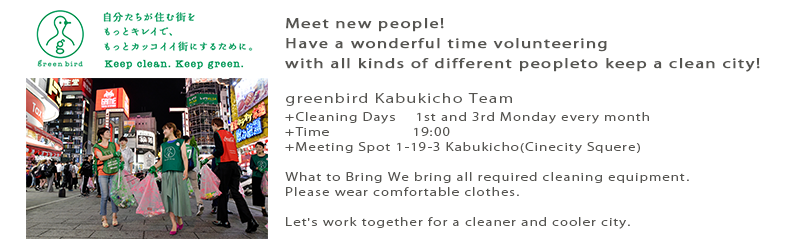
Volunteer activity of Kabukicho
How to Reduce the Risk of Becoming a Victim of Crime